

What if choosing springs for the heaviest load you might carry leaves your 4x4 feeling wrong on everyday drives? A better starting point is the weight it carries regularly. 4x4 constant load leaf springs are designed to support extra weight that stays on the vehicle, such as a canopy, drawers or other permanent touring gear.
If you’re unsure how constant-load ratings differ from heavy-duty or other spring setups, focus first on how your vehicle is actually used. A spring matched to a fully equipped touring vehicle may feel too firm when you remove the gear, while a setup chosen for an unladen vehicle may not suit its regular load. Your suspension choice also needs to suit your vehicle and account for safe load-carrying capacity.
This guide explains how constant-load leaf springs compare with other options and what to assess before choosing a suspension kit. You’ll learn which vehicle and load details to record, how to compare spring approaches, and why a wheel alignment matters after a suspension change. We’ll also cover the need to consider Australian requirements before modifying your 4x4’s suspension.
Key Takeaways
- 4x4 constant load leaf springs are intended for a stated load the vehicle carries regularly. Suitability depends on the specific spring and vehicle application.
- Consider how your 4x4 may feel when its usual load is removed, and assess springs and shock absorbers as parts of the same suspension setup.
- Compare constant-load, variable-load and progressive rate springs against how often your vehicle’s load changes.
- Record your vehicle details, permanent accessories, routinely carried equipment, occasional loads and intended use before choosing a setup.
- Use those details to guide suspension selection in Perth, including comparison of premium suspension kits available through Precision Offroad 4x4.
What 4x4 constant load leaf springs are designed to do
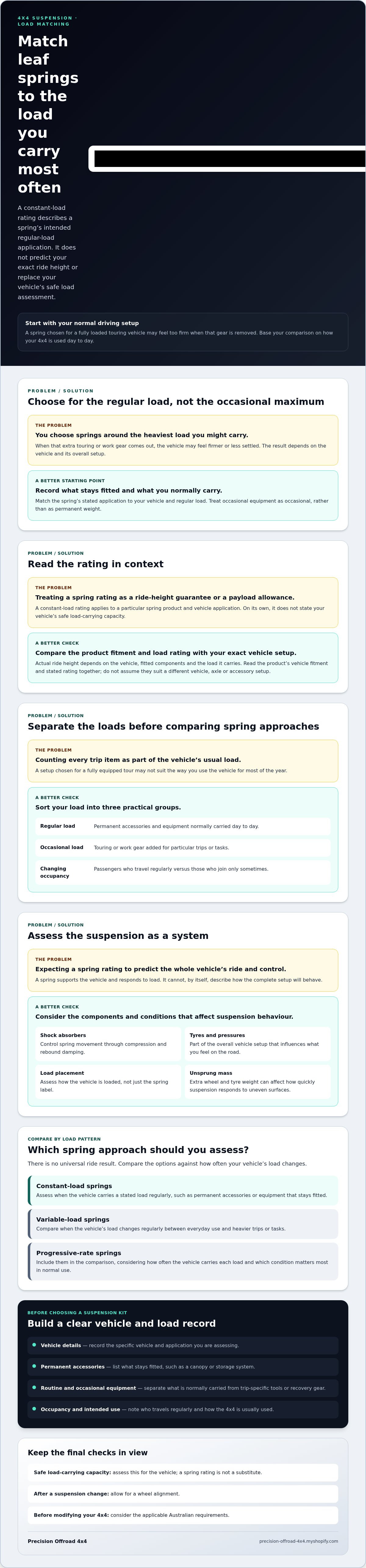
4x4 constant load leaf springs are intended to support a stated load that your vehicle carries regularly. That load may include permanent accessories or equipment that stays fitted between trips. The rating applies to a particular spring product and vehicle application, not every 4x4. It also isn’t a measure of your vehicle’s safe load-carrying capacity.
In plain terms, a constant-load rating describes the spring’s intended regular-load application, not a guaranteed ride height. Actual ride height depends on the vehicle, its fitted components and the load it carries. A rating alone can’t tell you exactly how your 4x4 will sit or feel.
Leaf springs support the vehicle and help control axle movement. This overview of leaf spring design and function explains the basic arrangement. For selection, focus on matching the spring’s application to your actual vehicle and regular load, rather than choosing a rating based on the biggest load you might carry occasionally.
What does a constant-load rating mean?
A stated constant load refers to the spring’s intended application: supporting a defined load that remains on the vehicle as part of its usual configuration. Product listings may specify both vehicle fitment and a load rating. Read those details together. A rating shown for one spring and application shouldn’t be assumed to suit a different vehicle, axle or accessory setup.
Figures in a product title or listing describe that product’s stated context. They aren’t a general recommendation, a promise of a particular ride height, or your vehicle’s payload allowance. Your vehicle’s safe load-carrying capacity depends on the vehicle, not the spring rating alone. Compare the product’s fitment and rating information with your vehicle’s details before making a selection.
What counts as the load your 4x4 regularly carries?
Start with what stays fitted or is routinely carried. Write down permanent accessories, then list the equipment that’s usually in the vehicle. Depending on your setup, this could include a canopy, storage system, tools or recovery gear. Keep the list specific to your vehicle. Don’t count occasional equipment as permanent just because it comes along on some trips.
Separate your notes into three groups:
- Regular load: accessories and equipment normally carried day to day.
- Occasional load: touring or work gear added for particular trips or tasks.
- Changing occupancy: passengers who travel with you regularly versus those who join only sometimes.
This distinction matters. A setup chosen around a fully loaded touring configuration may not suit how the vehicle is used for most of the year. A clear load inventory gives you a sound basis for comparing spring options and matching the product to your vehicle’s application. It also helps you decide whether your load is genuinely constant or changes often enough to consider another spring approach.
How constant-load leaf springs affect ride and suspension behaviour
A spring setup intended for a regular load can feel different when that load is absent. With less weight pressing down on the suspension, the springs are working under a different condition from the one they were selected to support. You may notice a firmer or less settled feel, but the result depends on the vehicle, spring design, shock absorbers, tyres and overall setup. The constant-load label alone can’t predict ride quality.
Matching spring choice to your regular load gives you a more useful basis for comparing suspension options. Consider how the vehicle behaves during an ordinary week, not just how you want it to sit when fully packed for a trip. Assess 4x4 constant load leaf springs as part of a complete suspension setup, with expectations based on the vehicle’s actual use.
Constant load versus variable load
If your vehicle carries the same accessories and equipment most days, a constant-load approach may suit that steady pattern. If you regularly switch between an empty vehicle and a heavily packed touring setup, the suspension faces changing conditions. Choosing springs around an occasional maximum load may affect how the vehicle feels during everyday driving, when that extra weight isn’t aboard.
There’s no universal ride result. The useful question is how often the vehicle carries each load and which condition matters most in normal use. Note whether work gear, passengers or touring equipment are consistently present or come and go. That distinction helps set realistic expectations before you compare spring options.
Why springs are only one part of suspension behaviour
Leaf springs support the vehicle and respond to changes in load. A shock absorber controls spring movement by damping compression and rebound. If the spring and shock absorber aren’t suited to the same vehicle application and operating conditions, the whole system may not behave as intended. Assess them together rather than treating a spring rating as a complete prediction of ride and control.
Other parts of the vehicle matter too. Tyres, pressures, load placement and suspension condition all influence what you feel on the road. Added wheel and tyre weight increases unsprung mass, the weight of components not supported by the suspension. More unsprung mass can affect how quickly the suspension responds to uneven surfaces. It’s one reason to assess a modified 4x4 as a whole rather than judge its springs in isolation.
Vehicle dynamics involve interacting factors, as the SAE International material on vehicle dynamics and suspension research reflects. For a practical comparison, keep the vehicle load, tyre setup and driving conditions consistent where possible. Record how the vehicle behaves with its usual equipment and, if relevant, when that equipment is removed. These notes give you a clearer basis for discussing suspension options.
Once you’ve identified your load pattern and ride priorities, compare suitable Dobinsons and Fulcrum suspension kits as complete applications, not by spring label alone.
Constant-load, variable-load and progressive-rate springs compared
Start the comparison with how you use your 4x4, not with a “heavy-duty” label. Consider how often the vehicle carries its usual load, how much that load changes and what you expect from the suspension on ordinary drives. These approaches describe different ways to think about load and spring behaviour, but the exact application still matters.
| Spring approach | Load pattern to consider | Key selection question |
|---|---|---|
| Constant-load | A similar load stays on the vehicle, such as regularly fitted accessories and routinely carried equipment. | Does the vehicle carry this load for most of its use? |
| Variable-load | The vehicle often changes between lighter everyday use and heavier work or touring configurations. | How often does the load change, and which configuration is most common? |
| Progressive-rate springs | The spring is designed to increase stiffness as it compresses, responding differently as suspension load and movement increase. | Does this spring design suit the vehicle’s application and changing use? |
When does a constant-load setup make sense to assess?
Assess this approach if your 4x4 routinely carries a similar working or touring load. Separate permanent accessories from extra gear added for occasional trips. A canopy or storage system may stay fitted, while camping equipment or additional work gear may come and go. That distinction helps you describe the vehicle’s regular configuration clearly.
Then compare the stated spring application with your vehicle and its usual load. A constant-load label by itself doesn’t establish suitability. Fitment depends on the vehicle and the particular product application, so use the relevant fitment and rating information together rather than relying on a broad category name.
When should you compare other spring approaches?
If you frequently drive both loaded and unladen, compare options against both conditions. A setup selected around the occasional full touring load may not reflect the vehicle’s more common, lighter use. Note how often you carry extra passengers, work equipment or trip gear, then decide which load pattern should guide your comparison.
Progressive rate springs increase stiffness as they compress. They’re designed to offer a softer response when less compressed and firmer support as compression increases, but that description doesn’t mean they suit every vehicle with a changing load. Product application and the rest of the suspension setup still count. Compare the intended spring behaviour with your regular driving and load pattern, rather than assuming “progressive” guarantees a particular ride.
A useful comparison records your usual configuration, occasional additions and how often you drive in each configuration. That gives you a practical basis for assessing constant-load, variable-load and progressive-rate approaches. For wider guidance on suspension selection and system considerations, see the 4x4 suspension performance and reliability guide.
How to assess your 4x4 before choosing constant-load leaf springs
Before comparing 4x4 constant load leaf springs, build a clear picture of your vehicle as it’s actually driven. Record its details, usual load, occasional gear and intended use. Then match that information against the exact product application. If the change affects ride height or other vehicle specifications, include compliance with current Western Australian modification requirements in your planning.
Build a practical load and use profile
Work through this checklist in order. Keep the details together so you can compare them with vehicle-specific product information.
- Identify the vehicle. Record its make, model, year, variant and drivetrain. Note which axle or end of the vehicle you’re assessing, as spring fitment is application-specific.
- List the regular load. Write down permanent accessories and equipment routinely carried. Separate items that stay fitted from gear you pack only for particular trips. Don’t guess weights. Record what’s on the vehicle and use verified load information where available.
- Note occasional changes. Describe the extra touring or work equipment you sometimes carry, along with changes in passenger numbers. Make clear whether the vehicle is generally loaded, usually lightly loaded or regularly switches between both.
- Describe its use. Note the balance between everyday driving, work duties and touring. Include the type of driving conditions you expect, without basing the spring choice solely on an unusual trip or maximum load.
- Match the product application. Compare your vehicle details and regular configuration with the exact spring specifications and fitment information. A product’s stated application is specific. Don’t assume a similar model or load description means it fits your 4x4.
Check fitment, clearance and suspension geometry
Fitment is only part of the assessment. If you’re also changing wheels or tyres, check how those choices interact with the suspension. Wheel-arch clearance is the space between the tyre sidewall and the inner wheel arch, which must prevent tyre scrub. Wheel track is the distance between the left and right wheels on the same axle. These measurements are relevant when wheel or tyre dimensions and positioning change, but they don’t replace the need to verify spring fitment.
A lift or other suspension changes may also affect suspension geometry. Assess whether suspension geometry correction is needed for the vehicle’s setup. Upper control arms (UCAs) are one component to consider where front geometry requires correction. They aren’t automatically required for every spring change. For more context on wheel and suspension interaction, see this 4x4 wheel upgrade technical guide.
Before proceeding, check that the proposed modification meets the requirements that apply in Western Australia. Requirements can depend on the change and vehicle, so refer to current WA Department of Transport guidance for the relevant modification. A professional wheel alignment is mandatory after any suspension or tyre change. Include it in your post-change plan, then explore suspension kit options.
Choosing a 4x4 suspension solution in Perth
Bring four points together before choosing: the load your 4x4 carries regularly, how often that load changes, the exact vehicle application and the driving you expect to do. This keeps the discussion focused on your actual setup rather than a spring label or an occasional maximum load. If you’re assessing 4x4 constant load leaf springs, use your load notes alongside the product’s vehicle-specific information.
Precision Offroad 4x4 is a Perth-based specialist retailer of suspension products, including Dobinsons and Fulcrum suspension kits. Use your vehicle details and intended use to compare suspension options with a local specialist. Product selection depends on the exact application and specifications.
What information to have ready for a suspension discussion
Prepare a short, practical summary before comparing options. Include:
- Your vehicle’s make, model, year, variant and relevant configuration details.
- Accessories that stay fitted, such as a canopy or storage system, and equipment you routinely carry.
- Gear added only for work or touring, plus how often the vehicle changes between loaded and unladen use.
- Your intended driving use, including the balance between everyday driving, work and touring.
Keep permanent equipment separate from occasional additions. If passengers or carried gear change regularly, describe that pattern rather than treating the heaviest configuration as the normal one. This gives the discussion a useful baseline: the vehicle as it’s usually driven, how its load changes and what you expect the suspension to support.
Use those details to compare the exact vehicle application and product information. Similar model names or broad load descriptions aren’t enough to establish fitment. The selected suspension components need to suit the vehicle configuration and the requirements you’ve described. You can explore suspension options with Precision Offroad 4x4 as part of that comparison.
What to expect after a suspension change
Plan for checks after the change, not just the parts selection. Confirm the components are fitted to the intended application and assess the vehicle’s behaviour with its usual load. Pay attention to steering response, tyre clearance and any unexpected noise or movement. If something feels wrong, don’t treat it as a normal settling-in issue without having the setup assessed.
A professional wheel alignment is mandatory after any suspension or tyre change. Alignment checks help establish whether the steering and suspension angles are within the vehicle’s required settings following the change. Your 4x4 isn’t finished once the new springs and shocks are bolted in. Post-change checks are part of a responsible setup.
For a local discussion based on your vehicle, load pattern and intended use, contact Precision Offroad 4x4 in Perth.
Make your next suspension decision with confidence
Think about changes you may make to your 4x4 after the suspension work. A bull bar, canopy, wheel upgrade or added storage can alter the vehicle’s configuration. If you’re building in stages, record planned additions before selecting 4x4 constant load leaf springs. This gives you a clearer basis for assessing how each change may interact with the suspension, rather than treating every upgrade as a separate decision.
Keep a simple record of the components fitted, product application details and post-change checks. It gives you a useful reference if you later adjust the vehicle or review its setup. Where a modification requires documentation, keep the relevant records with the vehicle’s other paperwork.
Precision Offroad 4x4 is a Perth-based specialist retailer and an authorised Dobinsons and Fulcrum retailer. To plan your next upgrade, explore suspension options with Precision Offroad 4x4 and use your vehicle and load details to guide your selection.
Frequently Asked Questions
What are 4x4 constant load leaf springs?
They’re leaf springs intended to support a stated load in a particular vehicle application. For example, if your 4x4 carries a permanently fitted canopy and storage system, include those items when assessing whether the spring’s intended application matches your setup. A load rating isn’t your vehicle’s payload allowance, and it doesn’t guarantee a particular ride height. Use the product fitment and specification details for your exact vehicle.
Are constant-load leaf springs suitable if my 4x4 is sometimes unladen?
They may be, but assess how often you drive without the equipment the springs are intended to support. If the vehicle is often used without its usual accessories or gear, compare how that lighter configuration fits your ride expectations as well as how the vehicle performs under its regular load. Assess both real-world conditions, not just the occasional fully loaded trip.
Are heavy-duty springs the same as constant-load leaf springs?
Not necessarily. “Heavy duty” is a broad product description; “constant load” describes an intended load application. Product naming isn’t always consistent, so read beyond the category label. Check whether the listing specifies the vehicle configuration, axle position and load application relevant to your 4x4. If two descriptions sound similar, compare the product information rather than assuming the terms indicate equivalent spring behaviour or fitment.
How do I work out the load my 4x4 regularly carries?
Make a practical inventory. Note accessories that remain fitted, such as a bull bar or canopy, then list tools, recovery equipment and luggage you carry on most drives. Keep occasional camping gear separate. For example, gear added only for a holiday shouldn’t automatically define the vehicle’s everyday setup. Use your inventory to describe a normal week and identify regular changes in passengers or equipment.
Do constant-load leaf springs fit every 4x4?
No. A spring is designed for a particular vehicle application, so a listing for one model or configuration doesn’t establish fitment for another. Check the exact make, model, year, variant and relevant drivetrain details against the product information. Also account for existing modifications that may affect the setup. In Perth, Precision Offroad 4x4’s suspension range includes Dobinsons and Fulcrum suspension kits for vehicle-specific comparison.
Do I need a wheel alignment after changing suspension or tyres?
Yes. A professional wheel alignment is mandatory after any suspension or tyre change. The change can affect alignment settings, so include the alignment as part of the post-change plan, not as an optional extra. Have the vehicle assessed after the components are fitted and before treating the setup as complete. This check is separate from confirming spring fitment, load suitability and the condition of the rest of the suspension.