

4x4 wheel offset explained covers the millimetre distance between the mounting surface and the wheel centreline. Get that figure right and you prevent contact against suspension and arches, hold scrub radius in a safe band, and keep your rig street legal in WA. Precision Offroad 4x4 helps you select the correct offset so stability and compliance hold up on tough tracks.
3 Common fitment setups and which offset fits your rig
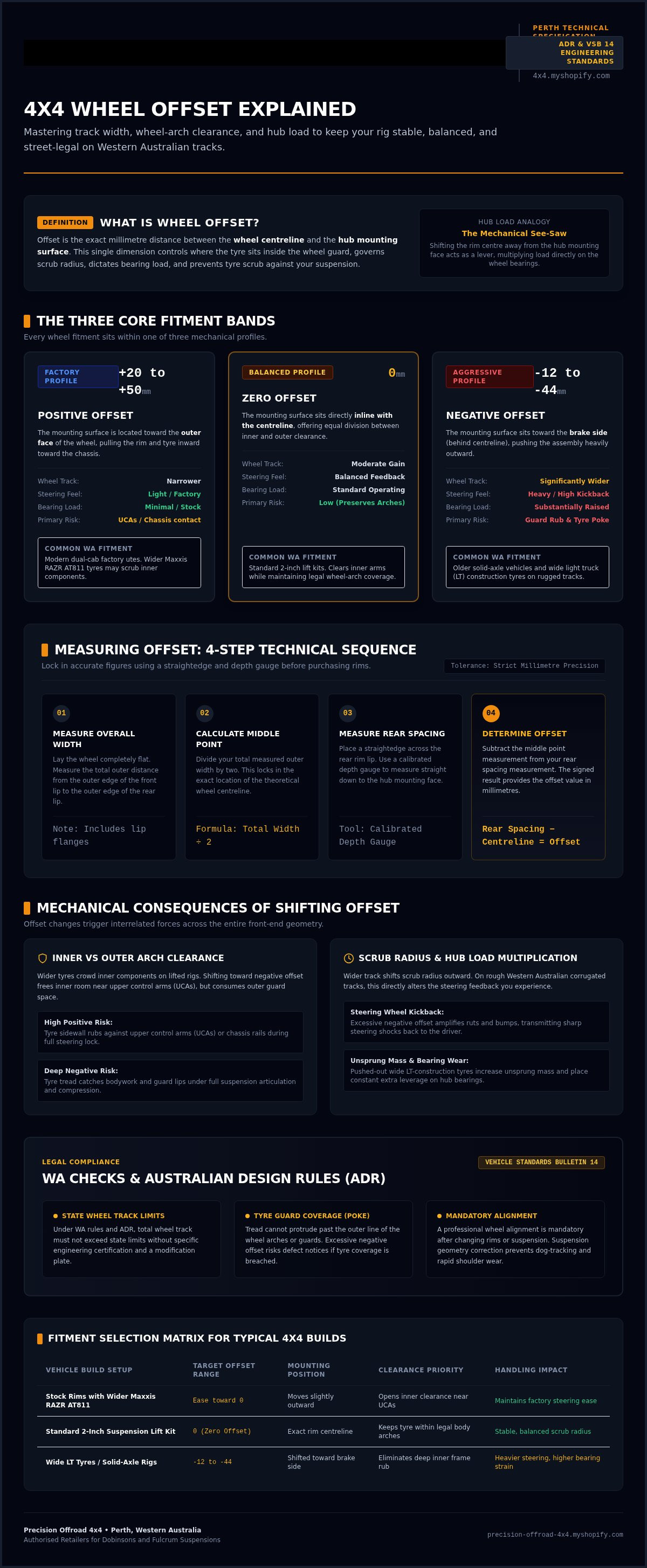
Before you order rims, match the offset to the job you actually do:
- Stock rims with wider Maxxis RAZR AT811 tyres: factory high positive offset tucks rubber under the arches, yet the extra width often kisses upper control arms (UCAs) or chassis rails. Ease toward zero offset so inner room opens while body coverage stays legal.
- Standard 2-inch lift with modest track gain: zero offset eases the wheel outward slightly and still keeps legal body coverage.
- Wide light-truck (LT) tyres on heavier tracks: negative offset in the -12 to -44 band shifts the rim outward; accept higher unsprung mass and heavier steering only if you need that stance.
Factory rims run high positive offsets (+20 to +50) to tuck rubber under arches and keep scrub radius balanced. Adjusting the mounting surface relative to the wheel centreline changes track width so those contact points disappear.
Three main fitment bands cover standard 4x4 builds:
- Positive offset: Standard factory fitment. Keeps steering light and limits bearing wear, but restricts tyre width.
- Zero offset (0): Eases the wheel outward slightly. Strong match for standard 2-inch lifts while maintaining legal body coverage.
- Negative offset (-12 to -44): Shifts the rim heavily outward. Suits wide LT-construction tyres, but increases unsprung mass and steering force.
Think of offset like a see-saw balanced over your hub assembly: shift the rim centre relative to the mounting surface and you raise load on the wheel bearings.
To stay inside Australian Design Rules and WA rules, your wheel track must not exceed state limits without certification. You can review compliant suspension setups with Precision Offroad 4x4. A professional wheel alignment is mandatory after any suspension modification so geometry is corrected and scrub stays controlled.
4X4 wheel offset explained for track width and hub load
Offset is the millimetre distance between the wheel centreline and the mounting surface. That figure sets where the assembly sits on the hub.
| Offset Type | Mounting Surface Position | Effect on Track and Stance |
|---|---|---|
| Positive Offset | Toward the outer face (outside the centreline) | Narrower track, wheel moves inward |
| Zero Offset | Inline with centreline | Balanced stance, equal inner/outer clearance |
| Negative Offset | Toward the brake side (behind the centreline) | Wider track, wheel moves outward |
Positive offset places the mounting surface toward the outer face of the wheel, which draws the assembly in toward the chassis. Negative offset places the mounting surface toward the brake side, which pushes the tyres outward and widens track. Zero sits on the true centre.
A wrong figure shows up as contact on full articulation, extra bearing strain, and a steering feel that no longer matches factory geometry.
Plan the number before you buy. The Technical Guide to 4x4 Wheel Upgrades in Perth (2026) sets out vehicle fitting specifications you can work through in detail. Guidance from Precision Offroad 4x4 makes legal configurations easier to lock in. Positive values suit modern dual-cab utes; negative values suit older solid-axle vehicles that need body clearance. Offset is a direct driver of dynamic stability.
How a straightedge and depth gauge lock in your offset figure
You calculate offset from total wheel width, the centreline, and the mounting flange position. For accurate results, Precision Offroad 4x4 recommends a straightedge and a calibrated depth gauge.
One detail that is easy to miss: overall width includes the lip flanges, yet the centreline is taken strictly from the inner tyre bead seats.
Follow this sequence for the millimetre value:
- Measure overall width: Lay the wheel flat and measure the total outer distance between the front and rear lips.
- Calculate the middle point: Divide the total outer width by two to locate the wheel centreline.
- Measure rear spacing: Place a straightedge across the rear wheel lip and measure down to the mounting surface.
- Calculate offset value: Subtract the middle point measurement from the rear spacing measurement. The signed result is your offset in millimetres.
Matched dimensions stop sidewall contact on arms and arches. Misplaced wheels change track width, which feeds straight into handling and into Vehicle Standards Bulletin 14 under Australian rules. Before you finalise the setup, schedule Do I Need a Wheel Alignment After a Lift Kit? The 2026 4x4 service so axle tracking stays straight. Legal offsets also spare the steering assembly from excess stress on harsh Western Australian corrugated tracks.
Offset shifts stability, arch clearance and steering feedback
Change the offset and you move stability, arch clearance, and steering feedback in the same motion, because the centreline shifts relative to the hub.
Push the figure too far negative and bearing loads climb while steering geometry drifts away from the design point. From hands-on builds, a moderate negative shift opens inner clearance and sets the tyres out like a wide-track dune buggy. The wider track alters scrub radius, so steering kickback rises on rough WA tracks.
Too much outward shift brings the tread into the bodywork on compression and can breach Australian Design Rules if tread sits past the guards. Wider tyres on a lifted rig often crowd the UCAs on the inside. Moving toward negative offset (mounting surface toward the brake side) clears that inner contact by shifting the wheel outward and widening stance; take it too far and you trade inner room for outer guard rub and legal poke.
Offset changes need suspension geometry correction if you want directional stability to hold. Proper alignment protects rubber such as a Maxxis RAZR AT811 from early shoulder wear. Skip the geometry work and you invite dog-tracking and rapid tread loss. Wheel Alignment After Lift Kit: Why It Is Mandatory walks through why that service keeps steering precise and legal. Zero offset fits standard touring; negative offset suits wide off-road setups.
When negative offset becomes a bad decision
Excessive negative offset loads the hardware and creates legal exposure in one move.
In the Perth workshop, wheel bearings that failed early often sit behind assemblies pushed too far out. Shifting the centreline away from the mounting surface adds leverage on suspension components.
That extra leverage changes scrub radius, so steering goes heavy and kickback on corrugated tracks turns aggressive. Unsprung mass hung further out also wears lower ball joints and UCAs faster.
Excessive tyre poke eats arch clearance on full compression. Under Australian Design Rules, tyres must not project beyond the guard, or you risk a defect notice. Wide Maxxis RAZR AT811 tread without proper coverage breaks those standards.
Stay conservative when you need legal clearance; deep negative figures suit dedicated track rigs only. Confirm state rules before you alter track width. For fitment advice that stays compliant, talk to Precision Offroad 4x4.
Verify tyre track limits to pass WA legal checks
Offset changes overall wheel track (the distance between the left and right wheels on the same axle), and that dimension must stay inside local limits.
Workshop checks show poorly calculated offsets leading straight to yellow defect notices at roadside inspections. Too much outward offset drives the tread past the bodywork, removes the space you need beside the arch, and sets up hard contact under load.
Open the track past legal limits and you also stack stress onto wheel bearings and shift steering geometry.
For full road legality, a Licensed Vehicle Modifier must inspect the install against standards such as VTB-180A. Post-registration modifications need formal certification before public roads. The right offset figure protects the engineering integrity you already paid for.
Precision Offroad 4x4 is an authorised Dobinsons and Fulcrum retailer, with gear tested for WA tracks, and can help you pick parts that meet Australian regulations.
Tip: Always verify post-registration upgrades against WA VTB-180A standards before driving on public roads.
Details and enquiries: Precision Offroad 4x4.
Frequently asked questions
What is wheel offset?
Wheel offset is the distance from the wheel centreline to the mounting surface. It sets where your rim sits relative to the hub and guards. Zero offset aligns the mounting surface with the true centreline. Positive offset places the mounting surface toward the outer face so the tyre tucks inside the guard. Negative offset places the mounting surface toward the brake side, moving the assembly out for a wider track.
What is the difference between negative and positive offset?
Negative offset places the mounting surface behind the centreline (brake side), so the tyre sits further out past the guards. Positive offset places the mounting surface toward the outer face, drawing the wheel in toward the inner components. Positive figures help you stay inside Australian regulations by limiting tread poke. Negative figures give a wider stance for steep terrain. Pick the direction that matches your clearance needs so chassis contact stays under control.
How do I measure wheel offset?
Measure total wheel width from inner flange to outer flange, then divide by two to find the centreline. Next, measure from the rear flange down to the flat mounting surface for backspacing. Subtract the centreline figure from the backspacing value. A positive result is positive offset; a negative result is negative offset.
Which offsets are recommended for common 4x4 models?
Most modern dual-cab 4x4s work well with factory positive offsets from +30 to +55. A suspension lift or UCAs frees room for wider rims. A move to +12 or zero often improves balance while guard coverage stays intact. Deep negative figures can scrub body mounts or cause dog-tracking unless you cut guards. Confirm local state rules before you fix rim dimensions.
How do I calculate wheel offset?
Subtract your centreline measurement from your measured backspacing. The remaining distance in millimetres is the offset value, signed positive or negative. Have a Licensed Vehicle Modifier inspect the finished install so it meets standards such as VTB-180A. Accurate math keeps suspension geometry correction on target after the work.
Correct offset keeps clearance, track and WA compliance in line
Dial in 4x4 wheel offset and you hold arch clearance, legal track width, and stable handling on Western Australian tracks. The distance between the wheel centreline and the mounting surface is what governs that result.
As an authorised Dobinsons and Fulcrum retailer with Licensed Vehicle Modifier certification, the Precision Offroad 4x4 team builds off-road setups around local conditions. Sound offset choices keep suspension geometry honest and the vehicle compliant in 2026. Review the 4x4 upgrade options on offer, then contact the advisers to request a quote for your build.