

What if the best leaf spring for your 4x4 isn’t the stiffest one, but the one matched to its regular load? A Dobinsons leaf springs review can help you compare options, but feedback often mixes spring performance with other suspension parts or the buying experience. Separate comments about the product from other experiences, then judge them against your vehicle and how you drive it.
Start with exact vehicle fitment and the weight you carry most often. A setup suited to a touring vehicle with permanent accessories may not suit an unladen daily driver. This guide explains how to assess load-carrying capacity, read owner feedback and account for factors that affect ride, handling and wheel-arch clearance.
You’ll also find a practical checklist for planning a suspension change in Perth, including professional wheel alignment and checks for Australian compliance. Precision Offroad 4x4 is a Perth-based specialist and authorised Dobinsons retailer. The key questions before choosing a setup are what fits your vehicle, what load it must support and how you’ll use it.
Key Takeaways
- A useful Dobinsons leaf springs review considers vehicle fitment, actual load and driving use, not brand sentiment alone.
- Compare your current setup with the proposed one, including regular accessories, carried gear and the symptoms you want to address.
- Give more weight to feedback that identifies the vehicle, spring setup and load than to general comments without context.
- Use a step-by-step fitment check to document your vehicle and load, assess applicable WA requirements and inspect the setup after installation.
- When certification is required, Licensed Vehicle Modifier capability can help address the approval process and any required modification plate.
What does a Dobinsons leaf springs review tell you about real-world suitability?
Judge suitability by four factors: correct vehicle fitment, the load the vehicle carries, how you use it and the quality of the evidence behind each claim. A Dobinsons leaf springs review is most useful when it describes a setup similar to yours. A brand-wide rating can’t show how one spring application will perform on every vehicle.
A leaf spring supports the vehicle and helps manage axle movement as the wheels travel over bumps. For a basic explanation of the design and how leaf springs work, see Understanding Leaf Springs. The spring is only one part of the suspension system. Comments about ride or handling may also reflect the shock absorbers, tyres, accessories, load or installation.
What the available Dobinsons leaf-spring feedback can and cannot tell you
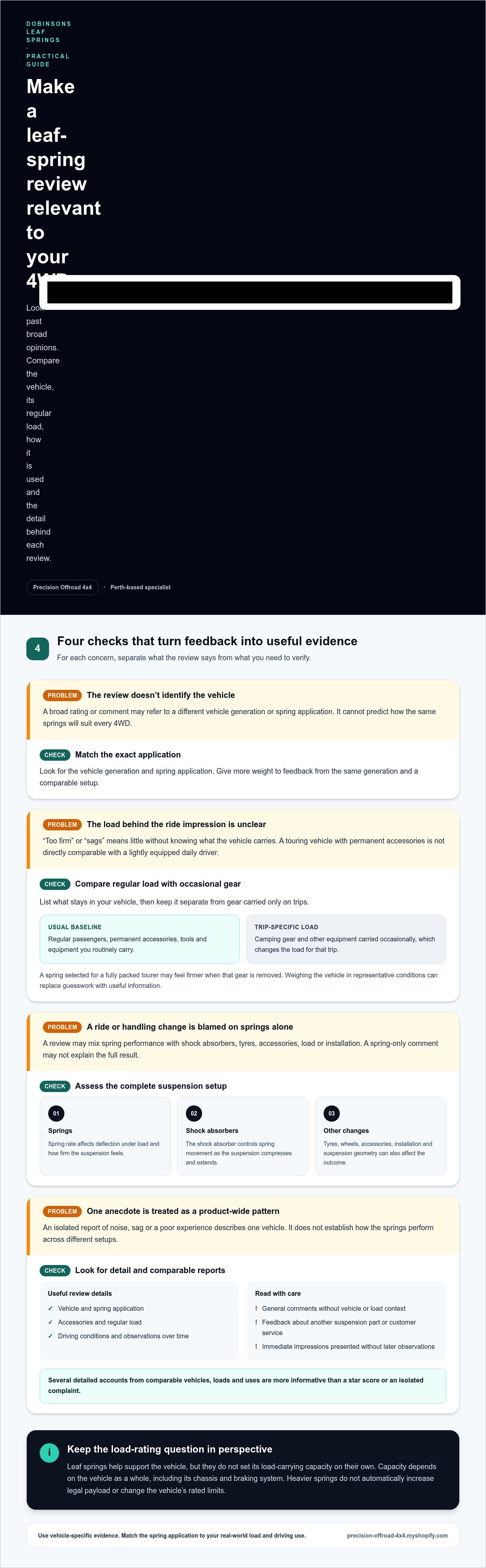
Read reviews for the details they provide. Feedback about a shock absorber, customer service or another suspension part isn’t direct evidence about leaf-spring performance. Comments about sag or noise can prompt useful questions, but individual experiences don’t establish a product-wide pattern. A review without owner details about the vehicle, spring application and load can’t tell you whether the same result is likely on your 4WD.
An owner anecdote describes one vehicle. Repeated, vehicle-specific evidence is more useful for judging a comparable setup.
Why vehicle application changes the review
Spring behaviour depends on the vehicle application, carried load and intended use. A touring 4WD with permanent accessories and packed gear isn’t directly comparable with a lightly equipped vehicle used mainly for commuting. Even the same model name can cover different generations or configurations, so check whether a review identifies the vehicle and explains its setup.
Prioritise feedback from the same vehicle generation with a similar load and use pattern. If those details are missing, treat the comment as context, not a prediction. Without comparable applications, a blanket verdict, positive or negative, goes beyond what the evidence supports.
For each review, note whether the owner identifies the vehicle, spring application, accessories, regular load and driving conditions. Separate immediate impressions after fitting from observations made over time. Also consider whether another component could explain a reported change. Several detailed accounts from comparable setups are more useful than a star score or an isolated complaint.
This approach doesn’t dismiss negative feedback. It gives it context. If owners describe similar symptoms on comparable vehicles, examine the application and setup closely. If their vehicles, loads or other components differ, the reports may not answer whether the springs suit your 4WD.
How Dobinsons leaf springs affect load, ride and suspension control
Spring choice affects how your 4WD carries weight and responds to bumps, but it doesn’t determine the vehicle’s load-carrying capacity on its own. That capacity depends on the vehicle as a whole, including its chassis and braking system. Fitting heavier springs doesn’t automatically increase legal payload or change the vehicle’s rated limits.
Your regular load and the spring application shape how the suspension behaves, both on the road and under load. A Dobinsons leaf springs review is more useful when it explains what the vehicle carried and how it was driven, rather than describing ride feel without context.
Match spring choice to the load you actually carry
Make a realistic list of the weight that stays in your vehicle. Include regular passengers, accessories, tools and touring equipment. A bull bar or drawer system that remains fitted contributes to the everyday setup. Camping gear carried only on occasional trips changes the load for those trips, but not necessarily your normal baseline.
Keep your usual day-to-day load separate from the heaviest load you expect to carry occasionally. A spring selected around a fully packed touring vehicle may feel firmer once that gear is removed. On the other hand, a setup suited to a lightly loaded vehicle may provide less support when you add regular accessories and equipment. Weighing the vehicle in representative conditions can replace guesswork with useful information, but the spring selection still needs to match the exact vehicle application.
Assess ride and handling as a complete suspension setup
Spring rate affects how much a spring deflects under load and how firm the suspension feels. A spring suited to constant weight can help support that load, but may feel firmer when the vehicle is unladen. The result also depends on the shock absorber, which controls spring movement as the suspension compresses and extends. Springs and dampers need to work together, so changing one part can alter how the whole setup responds.
Suspension geometry correction also matters if a modification changes ride height. Geometry affects how the vehicle steers and tracks, so assess the complete setup rather than judging springs alone. For an engineering overview of how suspension components work together, see Engineering Principles of Suspension Systems.
Consider unsprung mass if you’re also changing wheels or tyres. This is the weight of components not supported by the suspension, including wheels and tyres. A change in unsprung mass can affect how quickly the suspension responds to uneven surfaces, so a spring review alone may not explain the vehicle’s full ride or control.
Use the load, spring rate and related components to judge whether the proposed setup fits your priorities. A touring vehicle that carries equipment every day has different demands from a 4WD that is usually unladen. Keep your intended use central to the decision.
How to compare Dobinsons leaf springs with your current 4x4 setup
Start with your own vehicle, not a star rating. Record what’s fitted now, what you plan to change and the symptoms you want to address. Then compare those details with owner reports. A Dobinsons leaf springs review that identifies the vehicle, spring application and other suspension changes gives you a stronger basis for comparison than a general comment that the ride feels good or bad.
Compare like-for-like vehicle and load conditions
Use this table to organise the details before assessing reviews. Record the vehicle generation, accessories and typical carried load. If a report leaves out key information, mark it as unknown instead of assuming the setup matches yours.
| Comparison point | Current setup | Proposed setup |
|---|---|---|
| Vehicle | Model, generation and relevant configuration | Exact vehicle application for the springs |
| Load | Regular passengers, accessories and gear | Load the proposed springs are intended to support |
| Use | Typical driving, such as commuting, touring or off-road trips | How you expect to use the vehicle after the change |
| Known symptoms | Observed sag, harshness, noise or handling concerns | Changes you want to assess after installation |
For each owner report, check whether it names the spring application and mentions other changes, such as different shock absorbers or tyres. These details can affect the result. A report from another model or generation may offer context, but it isn’t direct evidence of how your vehicle will behave.
Use review patterns without overreading isolated complaints
Look for specific observations repeated across independent reports from comparable vehicles and setups. One complaint about sag or noise is worth noting, but it doesn’t establish a recurring fault. Stronger evidence describes the symptoms, vehicle configuration and circumstances, and separates what the owner observed from what they think caused it.
Separate product durability from installation quality, alignment, shock performance and customer-service experiences. For example, a reported handling change after suspension work doesn’t by itself show that the leaf springs caused it. Installation, alignment or another suspension component may also be relevant. Avoid ranking brands or claiming one is superior unless the evidence compares equivalent applications under comparable conditions.
Ratings on review platforms can cover a range of products and experiences, rather than leaf springs specifically. Check what the reviews discuss and when they were recorded before using an overall rating to guide a spring choice. A question without owner replies, or a review without setup details, can’t settle the comparison.
Finish by listing what the evidence supports and what remains unknown. Then focus on vehicle-specific fitment and documented setup details, rather than letting one strong opinion stand in for a like-for-like comparison.
How to check Dobinsons leaf-spring fitment and compliance in Perth
Use a consistent process before choosing springs. It helps you match the application to your 4WD, identify clearance concerns and plan the checks needed after installation. The compliance pathway depends on the vehicle and modification, so verify the current Australian and Western Australian requirements that apply to your setup. A Dobinsons leaf springs review can inform your decision, but it can’t replace a vehicle-specific assessment.
Prepare vehicle and load information before selecting springs
Record the vehicle model, generation and configuration, then list the accessories, passengers, tools and equipment normally carried. Describe concerns clearly, such as the rear sitting low when loaded, a change in handling or tyres approaching the guards. Note when each symptom occurs and what load is on board. This helps distinguish a consistent issue from one that appears only when touring gear is fitted.
Plan installation, alignment and certification checks
Follow this workflow before and after the spring change:
- Identify the vehicle. Record its model, generation and configuration so the spring application can be matched to the correct vehicle.
- Document the load. List regular accessories and carried equipment. Note occasional touring loads that change the vehicle’s weight distribution.
- Confirm the application. Match the spring selection to the vehicle and intended load. Compare product fitment information with those details instead of relying on a similar-looking vehicle or a general review.
- Assess the modification. Establish how the proposed change affects ride height and the overall suspension setup. Verify current Australian and WA requirements for the vehicle and modification, including relevant ADR and VSB 14 considerations where applicable.
- Inspect after installation. Check the vehicle’s stance, handling and tyre clearance under representative conditions. Check wheel-arch clearance for possible tyre scrub, including as the suspension moves through its travel.
A professional wheel alignment is mandatory after any suspension or tyre change. The alignment should account for the modified setup. If wheel upgrades are also planned, consider wheel track and tyre position, as these can affect clearance. These checks are related: changing wheel position can affect clearance, while suspension work can alter alignment settings. A technical 4x4 wheel upgrades guide can explain these interactions, but it can’t replace checking your specific vehicle.
If the modification requires certification, a modification plate is the permanent plate affixed to a vehicle to show that the suspension or GVM modification has been certified. Precision Offroad 4x4 has Licensed Vehicle Modifier capability for applicable certified modifications. Establish whether the specific approval process calls for a Lane Change test. Don’t assume every suspension change has the same requirement.
Plan the suspension setup around your vehicle, its load and intended use. For background on the options, see Precision Offroad 4x4’s suspension range.
Choosing Dobinsons leaf springs with a Perth 4x4 suspension specialist
Make your final choice against the vehicle you have, not a generic build or a spring recommendation detached from its intended use. A useful suspension discussion connects the exact vehicle application with the load it regularly carries and the driving conditions you expect it to handle. That gives you a practical basis for considering the spring option and any related suspension changes.
What to bring into a vehicle-specific suspension discussion
Bring a short record of your setup. Include the vehicle model and generation, existing modifications and accessories that stay fitted. Note your usual load separately from equipment carried only on longer trips. Describe where you drive and what you want to address, such as a change in ride comfort when loaded or a handling concern on uneven roads.
Inspection notes can make the discussion more precise. If you have alignment measurements or observations from a recent inspection, bring them along. Include when a symptom occurs and whether it changes with load. Clear details help distinguish the issue you want to solve from assumptions based on appearance alone.
Make the next step clear and practical
Use your vehicle and load details to discuss the proposed spring application and the rest of the setup as a whole. A clear record helps identify what needs assessment before components are chosen and what to observe once the vehicle is back on the road. It also gives you a baseline for comparing its behaviour in everyday driving and on trips.
Precision Offroad 4x4 is an authorised Dobinsons retailer. Dobinsons’ history in Australian off-road motoring provides brand context, but it doesn’t prove a particular outcome for your 4WD. Base your decision on the application and your requirements.
View suspension options from Precision Offroad 4x4 alongside your vehicle and load notes.
Plan your next suspension step with confidence
Before settling on a spring choice, turn your intended setup into a clear plan. Note what the vehicle carries most days, what changes on a loaded trip and how you want it to behave on the roads and tracks you use. This gives you a practical reference for assessing the setup after installation, instead of relying on first impressions alone.
A Dobinsons leaf springs review can help frame your research, but apply what you learn to your own 4WD. Keep records of the chosen application, alignment results and any changes you notice in ride height or handling. Those details can guide future adjustments and make your own feedback more useful.
Precision Offroad 4x4 is a Perth-based specialist and authorised Dobinsons and Fulcrum retailer, with Licensed Vehicle Modifier certification for applicable work. Match your vehicle details, load and intended use to the suspension options before making a decision.
For help planning a vehicle-specific suspension setup, contact Precision Offroad 4x4.
Frequently Asked Questions
Is Dobinsons a good choice for leaf springs?
Dobinsons may suit your 4WD if the spring application matches your vehicle, carried load and intended use. A brand-wide rating combines experiences across products and situations, so it doesn’t show how a specific spring setup performs. In a Dobinsons leaf springs review, give more weight to owner reports that identify a comparable vehicle, spring application, load and other suspension changes. Check the application details against your exact vehicle before deciding.
Can leaf springs sag over time?
They can sit lower, but a report of sag is an observation, not a diagnosis. The vehicle’s load history, spring condition, installation and other suspension components can all affect an assessment. Record what the vehicle carries and whether the change is visible when loaded, unladen or both. Then arrange an inspection of the springs and related components. One owner’s account can’t establish a typical lifespan or predict yours.
How do I know which leaf springs suit my 4x4?
Start with the exact vehicle application, then consider regular carried load, accessories and how you drive. A ute with a canopy and tools used daily has different requirements from the same vehicle carrying touring gear only on occasional trips. Write down those details before selecting springs and compare them with the product application information. Don’t rely on a similar model name alone. Specifications need to match your vehicle.
Do new leaf springs change ride quality when my 4x4 is unladen?
They can, but the result depends on spring rate, the rest of the vehicle setup and how much weight is on board. A spring chosen to support a regular load may feel different when that load is removed. To make owner feedback useful, compare reports from vehicles with similar accessories and driving conditions. A review from a heavily equipped touring vehicle may not reflect the unladen ride in your daily 4WD.
Do I need a wheel alignment after changing suspension?
Yes. A professional wheel alignment is mandatory after any suspension or tyre change. It checks how the wheels sit and steer after the work, helping identify settings that may affect directional stability or tyre wear. Include the alignment in your suspension-change plan, not as an optional later check. Keep the alignment findings with your vehicle records in case handling changes or further adjustments are needed.
Does a suspension upgrade need a modification plate in WA?
Not every leaf-spring change needs a modification plate. Whether certification and a plate apply depends on the vehicle and the specific modification. Before proceeding, verify the current Western Australian and Australian requirements for your setup, including any applicable approval process. A Licensed Vehicle Modifier can be relevant where certification is required. Don’t assume a change is exempt or requires a plate based only on another vehicle owner’s experience.