

If you’re comparing heavy duty ball joints 4x4 owners might fit after a lift, the key question is whether the part suits your vehicle. A “heavy duty” label alone doesn’t confirm correct fitment or longer service life. Durability depends on choosing the right application for your vehicle, suspension geometry and operating demands.
A clunk over bumps, uneven tyre wear or a change in steering can make you wonder whether a ball joint is worn. Ball joints connect the control arms to the steering knuckle, allowing the suspension and wheels to move while maintaining steering control. Wear may affect how the vehicle handles, but these symptoms can have other causes and need proper assessment.
This guide covers what ball joints do, signs that warrant inspection and the vehicle details to check when assessing fitment, especially after a lift or suspension upgrade. It also explains how towing, touring and Perth’s mix of sealed roads and rough tracks can inform your inspection plan. Precision Offroad 4x4 is a Perth-based suspension specialist, so the focus is on practical checks and the whole suspension setup, not just a component label.
Key Takeaways
- A ball joint links suspension and steering components, but its position and role depend on your vehicle’s design.
- Noise, looseness and uneven tyre wear can have several causes. Treat them as reasons to arrange an inspection, not proof of joint failure.
- When comparing heavy duty ball joints 4x4 options, check vehicle fitment, documented specifications, construction and intended use, not the label alone.
- Before an inspection, record your vehicle details, suspension and steering changes, and the symptoms you’ve noticed.
- Assess ball-joint condition alongside suspension geometry, vehicle load and how you use your 4x4.
Heavy duty ball joints in a 4x4: what the label means
Your vehicle’s suspension design determines where each ball joint sits and what it does. Position, dimensions and application can vary between models and even between variants. A part described as “heavy duty” isn’t automatically compatible with your 4x4, and the label alone doesn’t establish greater strength or a longer service life.
How ball joints connect the control arm and steering knuckle
In some independent suspension layouts, separate upper and lower ball joints connect the control arms to the steering knuckle. Their positions and specifications relate to the surrounding suspension geometry, so the upper and lower parts may not be interchangeable. Other designs use a different arrangement. Don’t assume your vehicle has the same layout as another 4x4, even if the model or suspension looks similar.
A general reference on ball joint construction can explain the component’s basic design. For a replacement decision, vehicle-specific manufacturer information is more useful because it identifies the application for your exact model and suspension position.
What heavy duty can, and cannot, tell you
“Heavy duty” is a product description. Its meaning depends on documented design and application. The wording alone doesn’t tell you what materials or design changes have been made, which vehicles the part suits, or how it performs under a particular load. A larger-looking housing or different finish doesn’t verify construction or compatibility.
Separate two questions: does the component fit your vehicle, and is there evidence that its design suits your intended use? Start with the make, model, year and variant, then identify the required suspension position. If your 4x4 has a lift or other suspension changes, include them in the fitment assessment. A part listed for a similar model may still have a different application.
When comparing heavy duty ball joints 4x4 options, look for clear application information and documented design details rather than relying on the label. Don’t treat “heavy duty” as a promise of longer service life, greater strength or better off-road performance unless those claims are supported for that specific component and use. A standard-duty joint may be suitable when it matches your vehicle and operating demands. Verify fitment first, then assess the evidence behind the product description.
How ball-joint wear affects steering, suspension and tyre contact
A worn joint can affect how consistently the wheel is located as the suspension moves, which may change steering response or tyre contact. These effects aren’t unique to ball-joint wear. Another steering or suspension fault, wheel alignment or a combination of issues can cause similar symptoms. How the vehicle feels alone can’t identify a failed part.
Common signs that warrant a ball-joint inspection
Look for visible changes around the joint, such as a split boot, grease escaping from the boot or contamination around the joint. These observations can guide an inspection, but they don’t measure internal wear or establish whether the component is safe. Tyre tread patterns may also provide useful context, though alignment and other worn parts can affect tyre contact.
Note when a change began and whether it followed suspension work, a tyre change or an impact. That timing can help an inspector assess the concern. Warning signs warrant investigation, but only an appropriate inspection can confirm the cause.
- Joint area: note visible boot damage, grease or contamination.
- Tyre contact: record unusual tread patterns for assessment.
- Recent changes: note any work or impacts that happened before the concern appeared.
Keep these observations as context, not as a diagnosis. If you’re unsure whether a component is secure, don’t rely on appearance alone.
Why a workshop inspection matters
The inspection method depends on the suspension layout and the vehicle manufacturer’s procedure. A qualified technician can assess the joint in the correct position using suitable equipment. They can also examine connected steering and suspension parts, since looseness or abnormal movement elsewhere may cause similar behaviour.
Don’t try to assess movement by lifting the vehicle or levering components unless you’re trained and have the correct equipment. Incorrect support or inspection technique can create a safety risk and produce a misleading result. If a concern affects steering control or wheel security, arrange a prompt professional assessment and avoid driving if the vehicle may be unsafe.
Product information, such as the details provided for heavy-duty ball joints, describes a product range, not the condition of the joint fitted to your 4x4. Diagnosis must be based on the vehicle itself. For broader suspension context after a modification, review Precision Offroad 4x4’s 4x4 suspension options. Any decision about heavy duty ball joints 4x4 owners are considering should start with the vehicle’s actual configuration and inspection findings.
Standard versus heavy duty ball joints: compare fitment, use and evidence
Compare the application first, then the documentation and construction. “Standard duty” and “heavy duty” are descriptions, not universal technical grades. A standard-duty joint may suit your vehicle if it matches the specified application and operating demands. A heavy-duty label alone doesn’t establish correct dimensions, design, compatibility or service life.
| Comparison point | Standard-duty option | Heavy-duty option |
|---|---|---|
| Application | May suit the vehicle’s original specification and normal use when the fitment information matches. | Must still be specified for the correct vehicle and suspension position. |
| Documented specifications | Check manufacturer fitment details and any stated dimensions or application limits. | Look for the same fitment detail, plus documented information supporting the supplier’s description. |
| Construction evidence | Assess the component against the vehicle’s requirements, not assumptions based on appearance. | Look for clear design or material information. The label alone isn’t evidence of a particular construction. |
| Intended use | Can suit road use, touring or other demands if correctly specified. | Assess it against the stated application and your actual vehicle use. The name doesn’t make it suitable for every off-road condition. |
Selection principle: Match documented evidence and fitment to your vehicle before comparing labels.
Which details establish vehicle-specific compatibility?
Start with the make, model, year and variant, then identify the joint’s position in the suspension. Similar model names can cover different specifications, so a broad “4x4” category isn’t enough to establish fitment. Use manufacturer application information for the exact vehicle rather than judging compatibility by a part’s appearance.
Record any lift, replacement control arms or other suspension changes. These can affect the configuration and requirements for a replacement component. A lift alone doesn’t prove that you need a particular joint; fitment information must account for the modified setup. Check that the application covers the correct joint position and configuration.
How driving conditions inform the comparison
Think about how you use your vehicle. Regular sealed-road driving, touring with a loaded vehicle and demanding off-road travel place different operating demands on the complete suspension and steering system. Repeated impacts, maintenance history and vehicle setup can all affect component demands, but none identifies the right joint without application evidence.
When assessing heavy duty ball joints 4x4 options, compare supported specifications with your vehicle’s fitment and real-world use. Don’t assume a heavy-duty description guarantees longer life under touring loads or rough-track impacts. Likewise, don’t dismiss a standard-duty part that matches the manufacturer’s application and your operating demands. Base the decision on documented fitment first, then consider whether the stated design suits the way you drive.
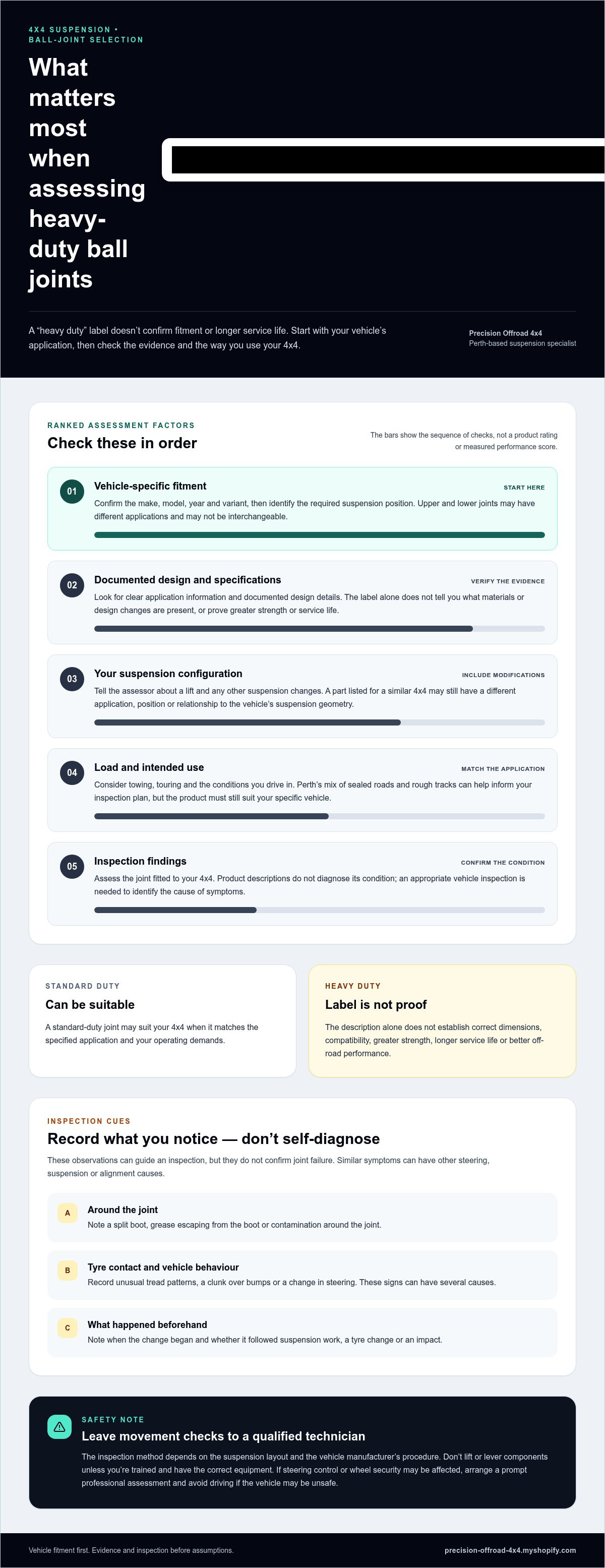
A practical inspection and selection process for Perth 4x4 owners
Use a consistent process before deciding whether a ball joint needs inspection or replacement. Gather vehicle and suspension details, record what you’ve noticed, then compare the correct application information. Perth and WA driving can include sealed roads, touring and rough tracks, but where you drive doesn’t determine which joint your vehicle needs.
Record vehicle, suspension and operating details
Write down the exact vehicle variant and front suspension configuration. Include any lift, replacement control arms or steering changes, and when the work was done. If the vehicle has a modification plate, record its details where relevant. Note the vehicle’s usual loads and whether you mainly drive on city roads, tour on highways or travel off-road tracks.
Then follow these steps:
- Identify the vehicle. Record its make, model, year and variant. Use these details when checking manufacturer fitment information.
- List modifications. Note suspension and steering components that differ from the original setup. Don’t assume a part listed for a standard vehicle also suits a modified one.
- Describe symptoms. Record any change in steering feel, noise or tyre wear, when it occurs, and whether it began after suspension work or an impact. This gives an inspector useful context without treating a symptom as a diagnosis.
- Check the application. Match the part to the vehicle and correct joint position using vehicle-specific documentation. If the application remains unclear, have the configuration assessed before selecting a replacement.
Check geometry and compliance after suspension changes
A lift can alter suspension angles and the relationship between components. Depending on your vehicle and setup, suspension geometry correction may be relevant. Assess the suspension as a system rather than treating a ball joint as an isolated upgrade. Precision Offroad 4x4’s 4x4 suspension performance and reliability guide provides broader context for planning suspension changes.
Applicable Australian Design Rules and WA modification requirements depend on the vehicle and work performed. Check the requirements for your specific configuration before modifying the suspension. General guidance can’t determine compliance for every vehicle. If a modification has been certified, keep its supporting documentation with your vehicle records.
Arrange a qualified inspection if symptoms affect steering control, if wheel movement or component security is in doubt, or if the vehicle has had a significant impact. An inspection is also sensible after steering or suspension changes if you’re unsure whether the setup is operating as intended. For broader suspension planning, explore 4x4 suspension upgrades alongside your vehicle’s use and modifications. Selecting heavy duty ball joints 4x4 owners are considering still depends on verified fitment and the complete vehicle setup.
Plan ball-joint decisions alongside your 4x4 suspension setup
A ball joint is one part of a connected suspension and steering system. Its fitment and condition matter, along with suspension geometry, other components and how you use your 4x4. A heavy-duty label can’t make up for a mismatch elsewhere in the setup. Consider these factors together before choosing a component or planning a wider suspension change.
When the wider suspension setup needs attention
A lift or changed suspension components can alter alignment and steering geometry. The effect depends on the vehicle and parts fitted, so assess the complete setup rather than assuming a ball-joint replacement will correct handling or alignment. Replacing a joint addresses that component only; it doesn’t restore geometry or resolve faults elsewhere by itself.
A professional wheel alignment is mandatory after any suspension or tyre change. Alignment is part of completing the wider change, not a substitute for confirming that components are correctly fitted and in good condition. If steering behaviour changes after a lift, have the setup assessed rather than assuming the ball joint is the cause.
What a considered next step looks like in Perth
Before making a decision, bring together your vehicle details, existing modifications, symptoms and intended use. A daily-driven 4x4 set up for touring may have different priorities from one regularly used on rough tracks. In either case, start selection with verified fitment and a clear understanding of the suspension and steering configuration. This gives you a sound basis for deciding whether a component change or broader setup review is appropriate.
Precision Offroad 4x4 is an authorised Dobinsons retailer. Its suspension expertise is relevant when planning how a lift, load and intended use work together; a ball-joint label alone doesn’t determine the right setup. Precision Offroad 4x4 holds Licensed Vehicle Modifier certification for relevant certified modifications. Certification requirements depend on the vehicle and modification, so assess them for the specific work rather than treating this as general legal advice.
Use the 4x4 suspension guide to consider the wider setup before settling on a suspension direction. When comparing heavy duty ball joints 4x4 options, keep fitment, geometry, condition and vehicle use in view. You can also explore suspension options with your broader vehicle setup in mind.
Set your next 4x4 upgrade up for success
Plan suspension decisions around the vehicle you want to build, not only the part you’re considering today. If your use is changing, such as moving from an unladen daily drive to regular touring, review the whole setup before selecting components. The label “heavy duty ball joints 4x4” still needs to be backed by vehicle-specific fitment and documented evidence.
A useful next step is to map how your suspension, steering and intended loads work together. The 4x4 suspension performance and reliability guide can help you plan the wider setup. Include your vehicle details and modification history as you decide what to review next.
For a considered path forward, explore Precision Offroad 4x4’s suspension options with your overall 4x4 setup in mind. Start with clear priorities and vehicle-specific information, then choose the next step that fits your vehicle and intended use.
Frequently Asked Questions
What does heavy duty mean for a 4x4 ball joint?
Heavy duty is a product description, not a standardised fitment category. For a practical comparison, read the application and specifications together: confirm the vehicle variant, joint position and whether the listed setup accounts for suspension changes. A product that resembles the original may still have a different application. For heavy duty ball joints 4x4 selection, rely on vehicle-specific documentation rather than wording on a box.
Can worn ball joints affect steering or tyre wear?
Yes. Wear can contribute to loose steering, unusual noise or uneven tyre wear, but these signs can also relate to other faults. Keep a brief record of what you notice, such as whether a noise occurs over bumps or steering feel changed after a trip. This information can help an inspector assess possible causes. Arrange an inspection promptly if steering control or wheel movement seems affected.
How do you know if a 4x4 ball joint needs replacing?
You can’t confirm that replacement is needed from a symptom or visual check alone. A qualified mechanic can inspect the joint using the vehicle’s specified procedure and assess related parts that may cause similar signs. Share service records, recent suspension work and the conditions in which the symptom appears. This helps distinguish joint wear from another issue and supports a repair decision based on the vehicle’s actual condition.
Are heavy duty ball joints better for a lifted 4x4?
Not automatically. A lift can change suspension geometry, but a replacement joint must still match the vehicle and its modified configuration. Check whether the manufacturer’s application information covers the suspension parts already fitted. For example, a vehicle with replacement control arms may need a different fitment assessment from one with its original arms. Consider alignment and suspension geometry correction as part of the overall setup, not as an assumed benefit of a heavy-duty label.
Can I replace a ball joint myself?
Only consider the job if you have the training, service information and equipment needed for your exact vehicle. Replacement procedures differ, and incorrect handling of steering or suspension components can create safety risks. Follow the manufacturer’s instructions for removal, installation and fastener requirements. If you’re unsure how to support the vehicle safely or assess the finished work, arrange qualified mechanical assistance rather than relying on a visual check.
Do I need a wheel alignment after ball-joint replacement?
Follow the vehicle manufacturer’s procedure and have alignment assessed after the repair where required. The need depends on the suspension design and work performed. Replacing a joint alone doesn’t prove the wheels are correctly aligned or that steering geometry is restored. A professional wheel alignment is mandatory after any suspension or tyre change. After other repairs, use the vehicle-specific procedure to decide whether alignment checking is needed.
Do heavy duty ball joints meet Australian vehicle requirements?
A heavy-duty description doesn’t establish compliance. Requirements depend on the component’s application, the vehicle and any related suspension modification. For a 4x4 in Perth, check applicable Australian Design Rules and WA modification requirements against the specific setup before work proceeds. Keep relevant manufacturer information and modification records with the vehicle, and follow the appropriate certification process if one applies.